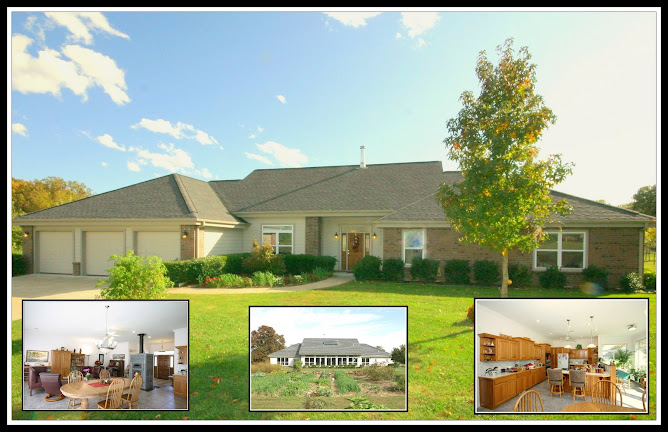
Living in Harmony with Nature and teaching others to garden the natural (organic) way, with emphasis on practices that lead to NUTRIENT DENSE produce!

Harmony Gardens

Harmony Gardens
Bey Home designed by Stitt Energy Systems, Inc. 2002

Welcome To Our Site

Our intent is simple: to provide useful information on gardening, health and sustainability issues. We will include class and meeting announcements, gardening information, and book reviews. The articles that Calvin writes for Garden Thyme, the Master Gardener Newsletter will be included. We will try to make this site easy to use and relevant.

About Me

My photo
Fayetteville, Arkansas, United States
Harmony Gardens is the home of Calvin and Doris Bey. As the name implies our goal is to live in harmony with the Laws of Nature. We are concerned about the environment, energy efficiency, organic gardening, alternative health, and sustainability issues. We love our Stitt Energy Systems Inc. energy efficient home, which received a First Place NAHB National Award for 2003. Calvin is a retired USDA Forest Service scientist. Each year he teaches classes in Organic Gardening in February and March and again in September. Doris is a retired RN. Calvin and Doris have put their energy efficient house up for sale (by owner). See first post for description, pictures, and house design.

February 1, 2009

Rodale Institute and the Organic Green Revolution


For many years I have been concerned about world health issues. In particular, it bothers me to see the world hunger situation in such dire straits. This month I want to share with you some information from a recent article, that I hope peaks your interest. First, let's examine a bit of history. As early as the 1930s and 40s some scientists were becoming skeptical of what was considered conventional agriculture. They saw the loss and deterioration of the soil, accompanied by the lack of nutrition in food for animal and humans, as a serious problem. These scientists did not get much attention. In fact, some were ridiculed, considered old-fashioned, and even condemned for their scientific contributions.

J.I. Rodale was one man with many concerns in this era. In 1941, he bought a farm in Pennsylvania, and in 1942 started a magazine, "Organic Farming and Gardening," with the goal of developing and demonstrating practical methods of rebuilding natural soil fertility.

In the 1960s many agriculture scientists, and others in government and industry, began advocating that the US had the solution to the world food shortage problems. The movement was called the industrial Green Revolution. In agriculture, that meant "get big or get out," an actual quote from Secretary of Agriculture, Earl Butz. The emphasis in agriculture was on genetics (hybridization and eventually GMOs) and chemical NPK fertilization for increased production. If you look at the agriculture scientific journals for the last 40 years, you can see how this theme prevailed.

As time went on, there was more and more emphasis on chemical herbicides and pesticides. The word "green" in the industrial Green Revolution had nothing to do with its general meaning today. To be "green" in agriculture today implies efforts toward sustainability and a non-invasive, friendly approach to the environment. The industrial Green Revolution was anything but green. While the Revolution was powering its way through the US and the world in the 60s and 70s, more and more people questioned the wisdom of chemical agriculture practices.

By1981, J.I. Rodale had died. His son, Robert, had taken over the "Organic Gardening and Farming" magazine, and had won USDA support to begin the Farming System Trials. These were tests to compare the conventional and the organic systems in farm-size trials. The criteria for comparison included crop production, as well as soil development characteristics, and energy inputs. It would be holistic, long-term, and comprehensive testing.

The Rodale/USDA tests were not the only ones making this kind of comparisons. Many farming-practice tests were being done in other places throughout the US and the world. Results trickled in and were published in Eco and Alternative Agriculture magazines. Throughout it all, conventional farming soils were still being degraded and the answer for more food production was generally the same…pour on more cheap NPK fertilizer. As the soils became poorer, the more fertilizer that was required, the more pest problems that developed, and the more pesticides that had to be applied. This has been referred to as rescue chemistry. No-till farming was developed, but was not the answer to reduction in use of chemicals. Along the way, the disease and insect folks tried to moderate the application of pesticides, through an Integrated Pest Management approach.

So how did the industrial Green Revolution do in answering the call to feed the world? Consider this. Of the 6.5 billion people in the world today, 923 million are seriously undernourished, more than 2 billion suffer from micronutrient malnutrition (hidden hunger), and 25,000 die each day from starvation. FAO reports that the fuel and financial crisis of the past year have plunged an additional 77 million people into malnutrition. The world's most vulnerable people have been hit the hardest. Soils have continued to be depleted and degraded, and the developing countries of the world have become dependent on others for much of their food, fertilizer and seed supplies, i.e. they moved closer to becoming welfare States. Few, if any, of the developing countries were successful in becoming self sufficient in agriculture.

All of this has not gone unnoticed. This world-wide issue involving agriculture and human health has been on the front burner for the United Nations (UN), World Bank (WB), Food and Agriculture Organization (FAO), World Health Organization (WHO) and many other organizations. The issues of food and health have come to an even more poignant junction with the recent increases in high energy costs. It's fair to say that although the intersection of environmental issues, energy, and the economy is messy and complex, it is clear that conventional farming practices need to change. This is not my conclusion, but the confirmed findings and recommendations of the recently released report of the International Assessment of Agriculture Knowledge, Science and Technology panel, supported by over 400 experts from FAO, UNEP, WHO, WB, UNESCO and more. See article "The Organic Green Revolution," by Drs. LaSalle, Hepperly and Diop. Go to RodaleInstitute.com, and click on Famine Prevention to find the article.

Here are a couple quotes from some of the base reports:

"The way the world grows its food will have to change radically to better serve the poor and hungry if the world is to cope with the growing population and climate change while avoiding social breakdown and environmental collapse."

…" the potential contribution of organic farming to feeding the world may be far higher than many had supposed."

The new Organic Green Revolution proposal is based on two guiding principles: Build soil organic matter through the use of cover crops, crop rotation, and compost; and improve ecosystem health and human nutrition through plant and animal diversity.

The authors list the following benefits of the regenerative organic farming systems that they have proposed.

  • Competitive yields
  • Improved soil
  • Money savings
  • Energy savings
  • Mitigation of global warming
  • Enhanced biodiversity
  • Water conservation
  • Improved resiliency to weather variations
  • Increased food nutrient density
  • Reduced toxic load


I personally believe the time in ripe for this Organic Green Revolution. Without it, the road ahead looks dismal. For those of us already on board with an organic approach, we extend our welcome and helping hand to those wanting to make the transition. If you missed the first train, don't worry. We will keep the light on until you arrive.

December 14, 2008

Growing Your Own Vegetables


Welcome New Master Gardeners! I hope that for many of you, the Master Gardening Course is the beginning of an adventure that lasts for the rest of your lives. Perhaps something in the course will be the spark that gets you into some new gardening areas that you have not previously considered. With the current economic and environmental situation in this country and the world, many gardeners are moving to a more natural or organic approach to grow their own vegetables. Many of the steps and processes in organics are parallel to the conventional systems. Simply avoid using chemical pesticides, highly processed fertilizers, genetically modified seeds, and raw manures, and you are on the way to the organic approach. There is no reason to be intimidated by the natural system for growing any crop. The model in Nature has been here a long time and it continues to serve us well.

What are the components in organic gardening? In the 10-hour Organic Gardening Course that I teach, I break the natural system into four interrelated components – compost, soil biology, soil minerals, and energy. By understanding the basics of these components, you begin to see how the whole system works. When you employ the holistic approach, the gardening processes become clear, and gardening becomes more enjoyable.

It is also exciting to see how the health of the soil affects the health of the plants, as well as the produce and the consumer. In my garden, and in my teaching, I work to understand how vegetables can be grown so that they are dense in nutrients (healthy). If you follow my recommended protocol, in a few short years, you will see that the soil has improved. That means improved tilth, fewer weeds, fewer insect and disease problems, and increased production with better taste and longer shelf life.

How big should I make the garden? Many factors will influence that decision. If you are just getting started, keep it small but do it right. A few hundred square feet will give you a lot of vegetables. I keep rough production figures,
and you can expect 1-4 pounds or more per square foot, depending on the crop. Sometimes the decision of size is just a matter of how much time you have to spend in the garden. My vegetable garden is over 2,000 square feet. In addition I have many perennials, i.e., blueberries, blackberries, raspberries, asparagus, rhubarb, figs, apples, peaches, plums, pears, and 10 soft shell pecans.

How much work is involved? I have been gardening for more than 50 years, so I have developed a lot of work-saving techniques. The original bed preparation generally takes the most time, but doing it right will pay off in the development of a healthy soil and future garden maintenance. I use and recommend double-digging, raised beds, minimal tilling, mulching, cover crops, and close spacing. The harvesting, freezing, drying, and canning, also takes considerable time, but knowing that the produce is free of pesticides, rich in minerals, and tasty, makes it all worthwhile.

Gardening Partners. If vegetable gardening is a new venture for you, I recommend you find a friend or neighbor who has similar interests. You can share information, seeds and some produce. Start by growing a few of the standard, easy-to-grow crops, and then expand each year. Try some crops you know little about. Look for enjoyment, surprises and good eating. I am always available to answer questions.


Sweet Corn, Paramagnetic Rock, and More


The seed catalog says, "Sweet Corn, Country Gentleman (Shoe-peg) - 95 days." I grew this 1890 Heirloom variety successfully in 2007, and decided to grow it again in 2008, using some new techniques. I have been a gardener for more than 50 years, but what followed surprised me.

I teach a gardening course, Biological/Organic Gardening and More, so I am always trying new crops and new ideas that may help gardeners become more sustainable. In addition, I strive to develop practices that make for effective but easy gardening. I have double-dug, raised beds and actually work the soil as little as possible. I never use a tiller. I have a silty-clay-loam soil, with 5 percent organic matter content, and have been fertilizing with organic materials for seven years. Here in Northwest Arkansas, we have a long growing season, so sweet corn can be planted over an extended time to get several successive pickings, even with 95-day corn.

Oats and/or Austrian winter peas make excellent fall/winter cover crops in our climate. The oats is my cover crop choice for beds that can be planted from mid-August through September. The oats will grow to 30 inches in height by the end of November, and then winter-kill when the temperature gets below 20 degrees. The oats generally fall over, mat down, and provide a thick bed of straw mulch for soil protection and weed control until I am ready to plant in the spring and summer. The Austrian Winter Peas are my choice for a late season cover crop, i.e. anything planted after October 1. The peas stop growing in December and resume again in February, and in the process, fix a lot of nitrogen in the soil.

For the bed where the 95-day corn was to be planted, I used Austrian winter peas for the fall/winter cover crop. In mid-May I cut off the 3-foot pea vines at the ground line, and laid them back on the beds for mulch, I did not till or work the soil in any way. Two weeks later, (June 2), I planted the Country Gentleman corn.

This year I added soil and foliar fertilizer mixes, as recommended on the basis of soil tests, by International Agriculture Labs, basically following the Reams system. All the soil fertilizers were simply added to the surface. In addition, I have become a strong believer in the use of paramagnetic rock for building soil energy. In the fall of 2007, before I planted the peas, I added one pound of paramagnetic rock per square foot, to all of my garden beds. My original garden soil had paramagnetic values of 80 -100 CGS, but by mixing the paramagnetic rock in the soil, to an 8-inch depth, I raised the CGS values to over 500. I felt that would be a good paramagnetic value starting point.

I have been gardening for 50 years and have been following the organic approach for more than 35. Yet what happened with this year's sweet corn is an unusual story. Remember now, this is 95-day corn, and I planted it late, so we could be eating it in late August and early September.

Here are the results. In three days after planting, the corn was up and it began to grow. In 30 days the corn was 6 feet tall, in 40 days it was 9 feet, in 50 days it was 12 feet, and on the 59th day from planting, we ate sweet corn with a Brix reading of 20. A few days later, the harvested corn had Brix values from 24-30. Any gardener would be happy to have these results. So what is the explanation for my corn reaching maturity in 59 days?


I strongly suspect that the paramagnetic rock was a big contributor for the rapid growth and early maturity. Many studies by Dr. Phil Callahan, Malcom Beck, and others attest to an increase in growth and other desirable traits for plants in soils where paramagnetic values are high. Dan Skow, D.V.M. and Charles Walters Jr. in their book, Mainline Farming for Century 21, point out that the growing season for 110-day corn can be shortened by creating a powerful magnetic field. In the mid-west corn belt, 110-day corn matures in about 110 days, whereas in central Mexico, where the magnetic field is less, it takes 9 months. See also The Non-Toxic Farming Hand book by Phillip A Wheeler, Ph.D. and Ronald B Ward, Biological Farm Management System Handbook by Bruce Tainio, and Graeme Sait in Nutrition Rules! for explanations and the value of paramagnetic rock. It's critical to understand that paramagnetic rock does not substitute for lack of minerals. The mineral content and mineral ratios need to be correct. Besides increasing growth and shortening the time to maturity, paramagnetic rock can increase frost hardiness, winter hardiness, insect and disease resistance, soil water holding capacity, microbial activity, flowering, and drought hardiness, as well as improve nutrient utilization.

Although what I have done, shortening the growing season, is not new, it's the magnitude of the change that is amazing. I point all this out because I think that we as gardeners can all decrease the time from planting to harvest, and simultaneously increase production and quality simply by following good soil nutrition rules and by raising the soil paramagnetic values. Shortening the growing season is not an academic endeavor. It's important from an economic standpoint for market gardeners, and it's critical in the northern climates, where early frosts can often curtail production. I will be experimenting further to shorten the growing season for a marginal crop in this area – figs.

If there is a negative in this, it's that the season for harvesting the sweet corn was also shortened. I had a similar situation with my Golden Bantam sweet corn this year, in that the time to maturity and harvesting period were both reduced. I believe that the shortened harvesting period can be remedied for growers simply by planting smaller, successive crops. In fact, once you understand the dynamics for your crops, it may make marketing easier to manage. After seeing what was occurring with the corn, I planted some cherry bell radishes, just to observe growth rates. When planted on August 9th, we were eating fully developed radishes in 18 days. Again, that was a substantial reduction from what I normally expect in our area.

I encourage gardeners and farmers to give paramagnetic rock a fair trial. For measuring the paramagnetic values, you will want a Phil Callahan Soil Meter, which is available from Pike Agri-Labs Supplies, Inc. located in Jay, Maine. The bottle-neck for many will be finding a source of the paramagnetic rock. Fortunately here in Northwest Arkansas, we have an organic farm and garden supply store (Nitron Industries in Johnson, AR) that purchased a big load of paramagnetic rock. The paramagnetic value of the rock is very high, testing over 10,000 CGS. The rock was purchased from Doug Murray, in Paw Paw, Michigan. Call Doug Murray at 269-930-9309 for details. He gets the rock from Canada, and can deliver it to any site.

I have been excited about this energy-building rock, since I first read about it. My vision was that my entire garden and eventually my entire 2 acres would be fully charged with magnetic energy, assisted by the paramagnetic rock. I visualize the entire site as an energy bubble, extending from below ground to above the plant surfaces. This was the first full year that the rock was applied to the garden, and the Brix levels of the produce have increased considerably. Better nutrition surely helped too. I have grown Moon and Stars watermelons for several years and their size has been in the range described in the catalogues, i.e. 10 - 25 pounds. Not this year! All the melons were considerably larger, several exceeding 40 pounds.

Another observation this year has been the increase in the number of birds and their activity. Since early spring, we consistently had more bird species in our garden area, in pairs, mating and nesting, than any previous year. It was like they found our energy bubble island, they liked it, and they decided to stay. We didn't mind, even the feeding of 30 or more hummers all summer.

The idea that energy is a key component to the biological gardening and farming approach is not always easy to explain or sell, especially to the conventional gardeners and farmers. When folks see my 12 foot corn in 50 days, eating it at day 59, and with a Brix of 20 plus, they want to know more. For some, it leads to a stop at the garden store to get a bag or two of paramagnetic rock. I never criticize the gardeners for their past gardening practices. I do coach them to move in the Go-Natural approach. For some it is the first small step to healthier eating, a friendlier approach on the environment, and hopefully someday realizing the social injustice that is currently being imposed on many farmers and indigenous people of developing countries, who are losing the use of their heirloom seeds with the infusion of GMOs.

I will be following up with observations on other crops in the future. For those who have observations and/or questions, I welcome your information and inquiry. In the currently existing "world food crisis" era, and the rapidly growing interest in raising our own food, we as gardeners have valuable skills to share. I hope we can all be working together to provide the best information possible.

Calvin F. Bey, Ph.D., is a retired agriculture scientist, living in Fayetteville, Arkansas, with a passion for teaching others about eco-gardening. He and his wife Doris use their demonstration garden and energy-efficient home to help others understand the concept of sustainability. He can be reached at CFBey1936@cox.net or see http://harmonygardens.blogspot.com

November 25, 2008

Science Based Organics


I spent several evenings this month reading scientific papers published in the Proceedings of the Second Scientific Conference of the International Society of Organic Agriculture Research. The conference was held in Modena, Italy in June of 2008. The Proceedings include over 400 papers. These are science based papers and include every kind of agriculture topic, coming from all over the world.

Many scientists from the United States had papers in the Proceedings and I was interested in those with long-term results. Iowa State University scientists reported on their 9-year corn and soybean tests, comparing conventional and organic systems. Here are their conclusions: (1) No differences in production figures between organic and conventional. (2) Costs of production were lower for organics. (3) Revenues for organic corn were 1.67 times greater than for conventional. (4) Revenues for organic soybeans were 2.32 times greater than for conventional. (5) Soil organic carbon and mineralizable nitrogen were greater in the organic tests.

The Proceedings included a lot of papers on soil development, plant nutrients, and beneficial micro-organisms. The conclusions or themes that are revealed include: (1) organic systems are better than conventional systems for building soil organic matter and fertility; (2) there is less leaching of nutrients, especially nitrogen, from organic systems, and (3) organic systems with good microbial populations utilize nutrients more effectively and also increase production. In a different vein, one study in Italy showed that residue from transgenic (Genetically Modified Organism) corn (with the Bt gene) reduced the establishment of beneficial mycorrhizal fungi. It's another reason why "certified organic" growers in the US are not allowed to use GMO seeds.

In another recent publication, ACRES USA, there are several articles on compost. The authors, with many years of personal experience dealing with farmers and gardeners, quote long standing research studies dealing with soil fertility and compost. I am a firm believer that compost is a key element as you garden, whether it is a conventional or an organic approach; but, with the following qualification…the amount of compost to use must be considered in light of soil nutrient availability. If used wisely, compost is a great product for many soils and it will pay great dividends. Compost provides nutrients, aids in promoting life in the soil and neutralizing toxins, improves soil water holding capacity, and improves soil tilth (structure and workability). As with any soil amendment or process, there are some misconceptions and cautions about the use of compost.

The misconceptions about compost, are as follows: (1) All compost is alike. In fact, the quality of compost depends on the composting process and what special products have been added. (2) The more compost you use, the better. You can't add too much. In fact, the amount to apply should be dependent on the soil nutrient analysis. There are times, e.g. when K levels are high and Ca is low, you should probably not be adding any compost. Remember, if a soil has too much of something, it will always have too little of something else. Nutrient-dense foods do not come from soils that are excessive in any of the required nutrients. (3) Compost should be applied regularly. In fact, compost should be applied when the soil analysis calls for it. (4) For good fertility, compost is all the gardener needs. In fact, soils often need some nutrients beyond what compost provides. It is entirely possible for a soil to already have too much of what compost provides. (5) Compost is far superior to all other fertilizers and soil amendments. In fact, compost is a tool for a specific job, and not an either/or decision.


If you are new at gardening, by all means become familiar and committed to composting. You can compost essentially all of your yard, garden, and kitchen wastes. It can be applied to the trees, bushes, vegetables, and flowers. Using compost moves you closer to becoming sustainable. As the price of fertilizers rise, and the economy weakens, compost becomes more and more important and valuable. Use it wisely.


Caring for Creation Seminar, Sequoyah, Oct 08

Caring for the Land – Our Stewardship Responsibility

Calvin F. Bey CFBey1936@cox.net
http://harmonygardens.blogspot.com

I was born in 1936, and I grew up in a dairy farm in northern Michigan in a time when life was still relatively simple. Stewardship of the land was mostly about conservation and preservation practices. Stewardship on the farm meant you rotated crops, left land fallow, cultivated for weed control, terraced to prevent soil erosion, maintained soil quality by growing alfalfa and plowing it under, and used the animal manures to keep up soil fertility. Commercial fertilizers were used sparsely, and you saved seed for next year's planting.

Our "way of life on the farm," was done mostly with knowledge passed on from the previous generations. We strived to work with and follow the laws of Nature. We understood that we would make sacrifices for the greater good of soil and water sustainability.

That early philosophy of stewardship did not last, and it bothers me as to what has happened over the past 75 years (one short lifetime). Natural resource stewardship has degenerated to where we now routinely use the resources for our personal and corporate advantage. Farming has become more about business than about Nature. In many cases Nature is viewed as being inanimate, an infinite resource chest, and a place to dump toxins and wastes.

We have grown to think of Nature as an object that we control; as a slave, rather than a "living being" with a heart beat, and a partner in a cooperative venture. Nature is often viewed as property, to be bought, sold and used in keeping with what is deemed necessary and desirable for ourselves. We have done many things to destabilize Nature, rather than working to stabilize the Natural systems. It's appropriate to say, "Our heart is bent in on itself," meaning that we have treated Nature with self-centeredness rather than self-sacrifice. And it happened on our watch with governments, big business, and Universities participating, if not leading the way.

Perhaps like many cultures, our American transformation came as we ushered in and promulgated the benefits that came with the Industrial Revolution. We took pride in our technical successes, doubled our life expectancy, and lifted millions from poverty and scourge of disease. Unfortunately, maintaining intimacy with the Earth and Nature was not a central theme.

The 20th century theme in America could very well be characterized as "becoming bigger consumers." Alan Durning, in How Much Is Enough?, claims that during the period of 1950-2000, global workers and consumers produced and consumed as many goods and services, than in the entire period of history before that date. Americans in particular became a nation of people who collected "stuff". It was better to have more than to have enough. Witness today those who have houses full of stuff plus rented storage facilities for their "overflow."

In Matthew 12:24, we hear the clear message: "No man can serve two masters." In many ways, the money master has won the day, sometimes in the very name of God.

It's time to change our behavior regarding stewardship of land and all natural resources. It needs to begin with the Hippocratic oath, "First, do no harm" -- to the environment. It needs to be about respecting the laws of Nature, in all that we do. And for ourselves, it's about sacrificing and living with the philosophy that "having enough is better than having more."

To help provide standards and goals for desired future conditions, we need to understand the conditions that develop when Nature is in control. We can also learn a lesson from the description of the Creation account in Genesis 2. I understand that the Hebrew word for Adam means "earth creature," and the Hebrew word for Eve means "living." Soil and Life are our primordial identity. Our reason for being here is to be the guardians of the earth, meaning the topsoil, all the land, all the waters, and all resources.

As we deal with stewardship of planet earth, we need to have full appreciation of our roles as humans. First, we must be like vigilant, caring shepherds who look out for their sheep, selectively intervening for the sake of sustaining the flock. Second, we are responsible for serving the Earth and protecting it. We must become partners with the Earth, not operating like we have control over it. And third, we need to honor the immaculate integrity of all the natural systems. Resource practices that build, restore and amplify life should be encouraged.

The land stewardship practices that are needed today include a lot of remediation efforts. The issues revolve around two classes of natural resources – those that are limited and those that are renewable. For the limited resources, like oil, coal, copper, etc, it's a matter of developing proper extraction management policies and practices to insure extension of the resources, while looking for substitutes.

For the renewable resources, the issues of today have developed because of bad management practices. It is sad but true, that among many things, we have polluted our streams, rivers, and ground water, and have lost much of our top soil and soil fertility. These are critical life-giving resources that took a long time to develop, and will require long-term remediation techniques.

Our forbearers would be appalled to find that our stewardship practices have sent essentially every major life system into decline, and threatens the well-being of future generations of all earth's creatures, including man. If able to inquire, our forbearers would surely ask about life on the farm. They would ask questions like, "who runs the family farm, how are the neighbors getting along, is that old spring still functioning, and does Aunt Susie have enough vegetables "put up" for the winter?" They would be shocked to know that the family farm was sold to a large farm corporation, the neighbor's land is now a shopping center with 4 acres of asphalt parking, the spring has been polluted with farm pesticides, and that most folks don't grow their own vegetables, and certainly could not be bothered with "putting them up," whatever that means. Maybe we should give some thought to "life on the farm."

October 19, 2008

Selecting the Garden Site


In my Garden Thyme article last month, I wrote about "money in the bank," i.e. the value of nitrogen fixing plants, and how we can benefit. At that time, we didn't know the seriousness of the looming financial crisis, nor the serious adjustments in standard of living that would come quickly for so many. The first and hardest effected will be the poorest. I am afraid there are stressful times ahead. I am already hearing about folks who are now thinking about what garden produce they might grow to help their financial situation. As Master Gardeners, we can do more vegetable gardening for ourselves and help others.

Many of you say that you do not have a place in the back yard for vegetables. Well, how about the front yard?! Don't count it out. I have plenty of back yard garden space, but this year for demonstration purposes, I planted a cherry tomato in the front yard and surrounded it with marigolds. See recent October photo. I used a heavy wire, 5-foot high, 30-inch diameter cage for good support of the tomato vines. From that single plant, we have picked hundreds of plumb-size tomatoes and as of today, October 15, there are still more than 150 tomatoes on the plant. That one plant is sufficient for all our fresh tomatoes, and more. I will cover that plant for the first light frost or two, so we will likely have fresh tomatoes well into November.

Don't restrict yourself to tomatoes for the front yard. You could do about any vegetable crop. The only troublesome ones might be the vine-type vegetables like cucumbers, melons, or pumpkins that are hard to contain.

Here are the questions to ask as you decide where you place your garden. (1) Do I have enough direct sun? Ideally, go for full sun, but six hours of direct sun will do for some crops. (2) Where is my best soil? If you have choice, probably more important than anything else, select the soil that is the deepest. Get out the shovel and dig some holes. Soils low in organic matter and nutrients can be fixed. (3) Are there nearby troubling tree roots? My recommendation is that you stay 30 feet or more from any tree crown drip line. Once tree roots get into your garden space, you will have trouble. They will quickly proliferate, and rob the site of minerals and water. Keeping the tree roots cut off will be a challenge. Some people will cut down a tree in favor of the vegetable garden. I know, I have done it.

Besides selecting the garden site, I encourage you to plan your garden in considerable detail. Draw a map of the garden and decide what crop is going where. Get your seed early, and share seed with others. Last spring, seed companies experienced record sales, and ran out of seed. Next year promises to be an even bigger year for seed sales. I will be ordering some seeds in bulk, including some heirloom varieties, growing some plants, and having some available for my organic gardening class students and for Master Gardeners. If interested talk to me early about this.

By all means, get a soil test in January. The nutrient content cannot be determined by just looking at the soil. Whether it is a first-time vegetable garden or not, I recommend you get the organic matter content tested. It costs a few dollars, but is well worth it, especially if you are coming to me to get advice on an organic fertilization program. I am willing to help on organic gardening problems, but much like a human medical situation, better advice is assured with more information. I generally want a history of the site (fertilizers, pesticides, mulches, cover crops, composts, etc), soil test results, and problems during the last season. Together that gives me clues about what you might need to do to grow nutrient-dense produce.

I have looked at hundreds of Arkansas soil test reports, and the results from gardens are extremely variable. For different gardens, for any given nutrient, the pounds per acre from the lowest to highest can be 20 fold or more. Without a soil test report, any fertilization recommendations given will be little more than a wild guess. I prefer to leave the gambling to those going to Las Vegas.

Nitrogen-Fixing Plants - Money in the Bank

To most of us, the idea of getting something free is appealing. The old adage, "you scratch my back and I'll scratch yours," was originally said with the idea of people doing favors for each other. In a very similar way, that is what happens in nature with plants that extract nitrogen from the air, bottle it in little containers called nodules on the plants roots, and in turn use the nitrogen for their own growth. What a deal. It's like winning the lottery without buying a ticket, putting the money in the bank, and drawing interest.

There are well over 1,000 nitrogen-fixing plants, from bacteria, algae, ferns, shrubs, and commercial crops to many species of trees. These plants serve as important components in the intricate way Nature has designed complex ecosystems. We have learned how the "fixation" process works and which plants can generate the most nitrogen. Some of the nitrogen-fixers, which are classified as legumes, include garden peas, Austrian winter peas, beans, cowpeas, vetch, clover and alfalfa, to name just a few. Many farmers have used alfalfa in their crop rotation system, for building better soils. Alfalfa penetrates deep into the soil (even heavy clay soils), extracts minerals, increases soil organic matter, and add lots of nitrogen in the process.

Our air is 78 percent nitrogen, which means we have almost 3 tons of nitrogen above each acre of land. Unfortunately, plants cannot normally use it directly from the air in the stable gaseous state. It needs to first be converted into the various nitrate compounds. In most legumes that conversion comes about because of a symbiotic relationship with Rhizobium bacteria, which form those little white (pink inside) nodules on the plant roots.
The plants provide the bacteria with carbohydrates for energy and a stable environment for growth, while the bacteria give the plants nitrogen and other nutrients. Dig up a clover or bean plant in your garden and see if the nodules are present. If not, you may need to add bacteria (inoculum) to get the "fixation" process started. Most seed companies have the specific inoculum that you will need for your crop.

The amount of nitrogen produced by nitrogen-fixers can be very significant. Depending on soil conditions and the species, you can get 75-150 or more pounds of nitrogen produced per acre. Best of all, it is in a form that the plants can use and will be slowly released for use over the season. It's not likely to be leached out of the soil, and it is not going to be toxic or burn the plants.

I see many gardens and most gardeners are not using the nitrogen-fixing plants to their advantage. They are rejecting this free offer to put money in the bank. Organic growers apply nitrogen using a great variety of slow-release fertilizer sources – compost from vegetation and manures, alfalfa meal, fish meal, feather meal, and blood meal. These are all good, non-leachable forms, which will benefit plant growth. To move in the direction of being more sustainable, it would pay to use more of the nitrogen-fixing plants.

I use Austrian winter peas, and like to have them in the ground by October 1. They will grow for 6-8 weeks in the fall, and then resume growth again in February. By May 15, they will 30 inches or more tall and have produced a lot of nitrogen. The Austrian winter pea vegetation makes excellent compost, or you can use it for mulch on the garden. It's money in the bank!


Garden 2007

Garden 2007
Heirloom "Country Gentleman" Corn